Boudin Sausage - A Louisiana icon
This Cajun classic is a spicy, savory, umami bomb loaded with pork, rice, and the holy trinity of onions, celery, and bell peppers. It’s everything boudin should be: bold, rich, and unapologetically full of Louisiana flavor. And yes, it includes a little liver but don’t click away just yet.
Here’s the truth: you absolutely do not need to love liver to love boudin. When it’s done right, the liver doesn’t take over or taste metallic. Instead, it melts into the mixture and gives the sausage that signature richness you can’t quite put your finger on. You’re not going to taste a “liver” flavor.
Give it a chance, and I’m confident you’ll be a believer after the first bite. If I’m wrong, comment down below… and if I’m right, comment down below anyway.

Ingredients for Cajun Boudin Sausage (25-Pound Batch)
This is a true Louisiana-sized batch — enough to make your grinder sweat and your neighbors jealous.
Meat
- 2 pork butts (8–9 pounds each)
- 1 pound chicken livers
Vegetables & Aromatics
- 6 medium yellow onions, chopped
- 1 bunch celery, chopped
- 6 green bell peppers, chopped
- 2 bunches green onions, whites and tops separated
- 16 cloves garlic, peeled
Seasonings
- 2–3 cups Cajun seasoning (start on the low end, taste, and adjust)
- ½ cup #16 mesh black pepper
Rice & Fat
- 10 cups cooked long-grain white rice
- ½ cup vegetable oil
Casings & Serving
- 1 package 38mm natural hog casings
- 1 sleeve saltine crackers
- 1 bottle hot sauce
- Cold beverages for the cook


I like big batches and I cannot lie
Okay, step one: season up some pork shoulder, aka pork butt, aka Boston butt. I’m working with two 8-to-9-pound butts. This is a big recipe, but you can easily cut it in half if you prefer. Personally, I like to make big batches and freeze the Boudin sausage for later. These two cuts are boneless, but bone-in works just as well.

The spices you use on the pork are totally up to you. I know some people stick to their favorite Cajun seasoning and wouldn’t dream of using anything else. So, pick one you like. Some of the easier-to-find brands are Tony Chachere’s, Slap Ya Mama, or Cajun Two-Step from the ever-entertaining Mr. Stale Kracker.

Whichever one you choose, make sure to apply it liberally. The whole butt needs a good rubdown. After coating the pork in Cajun seasoning, we’re going to go back over it with a healthy dose of 16-mesh black pepper.

16-mesh black pepper is popular in the BBQ world because it helps build a nice bark. The “16” refers to the size of the mesh the grind falls through during the manufacturing process. If you can’t find 16-mesh black pepper, grab your pepper grinder and set it to coarse.
Smoke some swine: Smoking pork for Boudin
At this point, most recipes would have you sear the pork in a stock pot. But I’m taking a different route—I’m going to smoke my butts for a few hours to infuse them with a bit of smoky flavor. It won’t be overly smoky, just a subtle kiss of smoke. I’ll let the pork roll at 250-275°F for around 3 hours. Since we’re not making pulled pork, there’s no need to worry about it not being tender.

Veg out: Prepare your vegetables for Boudin
While the pork is smoking, I’m going to break out a big ol' stock pot. I believe this one is 32 quarts. If all you have is a standard 8-quart pot, you’ll likely need to do this in batches. In this big pot, I’m going to sauté my Cajun trinity of onions, peppers, and celery that I’ve roughly chopped. Since this mixture will be run through a grinder later, there’s no need to be precise. We will use the green onion whites here, saving the tops for when we go to stuff the sausage. I’ll also toss in a handful of garlic cloves. You can never have too much garlic, in my opinion!

Oh no, it's liver!
Now comes the part that some of you might dread: the liver. Traditionally, pork liver is used in Boudin. The amount you add will determine the intensity of the sausage’s metallic gaminess. I’ve had Boudin that’s been mild, and some that’s been pretty funky. Since I’m not a fan of pork liver, I’m opting for chicken livers instead.

Chicken livers are much milder and do a great job as a supporting cast member. They won’t dominate the flavor profile but will add a little something extra that you can’t quite put your finger on. Even if you’re not a fan of liver, I highly recommend not skipping the chicken livers. And remember, whether you agree or disagree, leave a comment down below
Simmer down
After a few hours in the smoke, I’m going to cut the pork into several large chunks and add it to the pot. Again, since this is all going through the grinder, precision isn’t a concern.


Next, add enough water to the pot until the mixture is just barely submerged. Now it’s time to break out the Cajun seasoning again. It’s hard to give an exact measurement, but you’ll need a good amount. I recommend starting with a cup, then tasting the broth. Keep adding seasoning until you reach the point where you think it might be too salty—then go ahead and add a bit more.

Bring everything to a rolling boil, then reduce the heat, cover, and simmer for an hour. We want to soften up the pork, but remember, it’s going into the grinder, so it doesn’t need to be tender enough to shred.

I couldn’t find the lid for my 32-quart pot, so I improvised with the lid from my 110-quart crawfish pot. Speaking of crawfish boils, Boudin sausage makes a great companion if you’re planning a big party. Be sure to check out my crawfish boil recipe here.

The strain of it all
After an hour, strain out all the ingredients. By now, the smell should be amazing. No one’s going to judge you if you sneak a nibble of pork, but whatever you do, DO NOT THROW AWAY THE COOKING LIQUID. We’ll be using a portion of that later.
Grindr: How to grind your meat for Boudin
Time to grind! Using a medium-sized die, run your braised mixture through the grinder plate. I have to admit, it doesn’t look very appetizing at this stage. Some of you Traeger owners might notice it looks a bit like smoking pellets.


Mix it up: Combine your Boudin ingredients
Once the meat and veggies have been ground up, it’s time to mix in our pre-cooked rice. I cooked this rice the day before and kept it in the fridge overnight. We’re aiming for roughly a 2:1 ratio of meat to cooked rice, so adjust based on how much you have. When I’m satisfied with the rice ratio, I’ll start mixing in some of the fat and juices from the cooking process. Since I didn’t stuff the sausage the same day I cooked, the fat and juices have congealed in the fridge. Don’t worry; I know it doesn’t look appetizing, but I promise the taste is phenomenal.


At this point you can add in your green onion tops.

Keep mixing until everything starts to get tacky. When you can form a big ball of the mixture and it stays stuck when you turn your hand upside down, you’re ready to stuff. I’m using a big 30-pound stuffer from Cabela’s, but you can use whatever you have on hand—it just might take a bit longer.

GAS - Gear Acquisition Syndrome
If you’re debating whether to buy a grinder and stuffer, I have one suggestion: skip the grinder and stuffer attachment for the KitchenAid stand mixer. Most people don’t have great results with that setup, and it often turns into an expensive headache. In my opinion, it’s better to buy once and cry once. If you think you’ll be making sausage regularly, I recommend investing in a stand-alone grinder and a stand-alone stuffer. Grinder/stuffer combos just don’t perform as well. However, if you already own the KitchenAid attachment, don’t rush out to buy new gear. If it's working for you then keep with it
Stuffin' it in: How to use a sausage stuffer


When placing the mixture into the stuffer, I like to really pack it into the stuffing tube. This helps force out any air, which reduces the chance of bubbles forming in the links. For this sausage, I’m using 38mm natural hog casings. Butcher & Packer and Sausagemaker.com are great resources for sausage-making supplies and casings. Be sure to follow the manufacturer’s instructions, which usually involve soaking the casings in fresh, clean water for about 24 hours. Most casings are packed in salt or a very intense brine, so this soaking step helps wash out the salt and soften the casings, making them more pliable. Use some water to lubricate the stuffing tube, which will help the casing slide off more easily. I don’t tie off the casing at the start; I leave it open so any air can escape and avoid creating a balloon with the first link. Apply some water to your work surface to help the sausage slide around. Slowly turn the crank and apply slight pressure to the casing to ensure it expands evenly. After stuffing the sausage, use a sausage pricker to poke out any air bubbles that may have gotten trapped inside. This will help prevent your sausage from bursting.
LinkedIn: How to link your Boudin

To link the sausage, pinch off the desired length and then spin the sausage away from your body. Spin 4-5 times or until the link is taut. Move down two link widths, pinch, and then spin the link toward your body. Repeat this alternating process until you’ve linked the entire rope. This alternating pattern helps keep the Boudin sausage from unraveling. Check out the video below to see me link in motion. I like to let my sausage set in the fridge overnight before cutting them into individual lengths. This allows the casing to dry out a bit and helps keep the ends sealed. You can use a knife to separate the links, but I find a pair of scissors works best.
Are we there yet? How to reheat Boudin sausage
I'm hungry, now what? There are several choices for reheating your Boudin sausage, depending on how you want to enjoy it. If you prefer a crisp exterior with some snap, an air fryer is a great option. Fry at 375°F for 5-6 minutes to get the job done. Keep in mind that each air fryer is different, so cooking times may vary. You can also achieve a decent result in an oven at 375°F for 12-14 minutes.


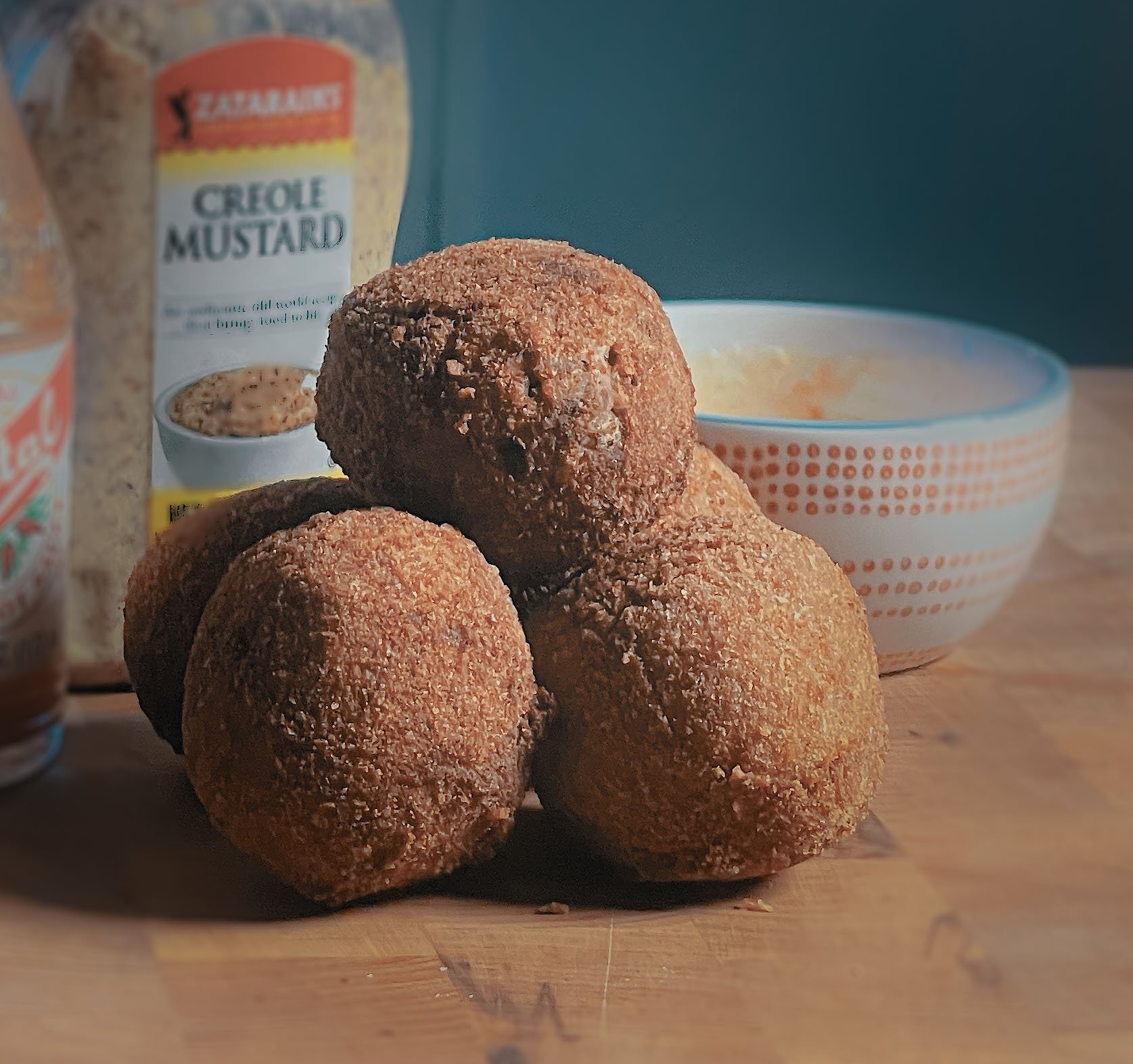
If you plan to squeeze the sausage out of the casing like a popsicle, spread it on a cracker with hot sauce, perhaps you want it loose over a bowl of rice, you might opt for other methods like microwaving, using a steam basket, or boiling it in water (add Cajun seasoning if you are going to boil). All of these methods are popular and will work well for reheating. If you do have leftover uncased boudin, save it and whip up some delicious Deep Fried Boudin Balls from this recipe.
Frequently Asked Questions About Boudin Sausage
Does boudin sausage contain liver?
Traditionally, yes. Classic Cajun boudin uses pork liver, but the amount varies widely depending on the recipe. In this version, I use chicken livers instead. They are much milder and add richness without overpowering the sausage. Even people who think they hate liver usually enjoy boudin when it is done right.
Is boudin sausage fully cooked?
Yes. Boudin is fully cooked during the simmering process before it is ground and stuffed. When you are reheating boudin, you are warming it through, not cooking it from raw. That is why methods like steaming, air frying, or baking work so well.
Can you freeze boudin sausage?
Absolutely. Boudin freezes very well. I often make large batches and freeze links for later. Let the sausage cool completely, then vacuum seal or wrap it tightly to prevent freezer burn. Thaw it slowly in the refrigerator before reheating for the best texture.
What is the best way to reheat boudin without it bursting?
Gentle heat is the key. Steaming, baking, or using an air fryer works better than boiling. If you do boil boudin, keep the heat low and avoid a rolling boil. Piercing the casing with a sausage pricker can also help release trapped air and reduce the chance of blowouts.
What do you serve with boudin sausage?
Boudin is often served simply with saltine crackers and hot sauce, but it also pairs well with rice, pickles, and cold beer. If you have leftover uncased boudin, it is perfect for turning into boudin balls or using as a stuffing for other dishes.

Cajun Boudin Sausage
Ingredients
- 16-18 pounds Pork Butt
- 1 pound Chicken livers
- 6 Medium yellow onions
- 1 bunch Celery
- 6 Green bell peppers
- 2 bunches Green onions
- 2-3 cups Cajun seasoning
- ½ cup #16 mesh black pepper
- 10 cups Cooked rice
- 16 cloves Peeled garlic
- 1 package 38mm natural hog casings
- ½ cup Vegetable oil
- 1 sleeve Saltine crackers
- 1 bottle Favorite hot sauce
- ? ? Unknown quantity of cold beverages
Instructions
- The night before you cook, soak your casings in fresh clean water and rinse thoroughly before stuffing.
- Season pork butts liberally with cajun seasoning.
- Sprinkle on the #16 mesh black pepper, evenly coating.
- Smoke the butts for 3 hours at 275 degrees.
- Roughly chops yellow onions, bell peppers, and celery.
- Dice green onions an ⅛ inch separating the green from white.
- While the pork is smoking sautée the onions, celery, and bell peppers in a stock pot with ½ cup of vegetable oil.
- Add in the chicken livers.
- After 3 hours remove the pork from the smoker and divide the butts into chunks slightly smaller than a tennis ball.
- Add the meat to the pot and just barely cover the ingredients with fresh water.
- Add in your cajun seasoning tasting as you go. When it seems almost too salty add a bit more.
- Bring to a rolling boil and then back the temp down to a simmer.
- Cover the pot with a lid and simmer for one hour.
- After an hour strain the mixture being careful to reserve the cooking liquid for later.
- Using a medium die grind your braised meat and vegetable mixture.
- Using a 2:1 ratio of 2 parts meat mixture to 1 part of cooked rice combine the two until evenly distributed.
- Add in 4 cups of braising liquid to start add more as necessary if the filling seems dry.
- Mix ingredients until evenly distributed and the filling is tacky enough to stick to your hand when turned upside down.
- Load the stuffer being sure to pack the mixture in and force out as much air as possible.
- Slip the casing on the stuffer tube being sure to wet the work area so the sausage can slide around.
- Stuff the casings. Coil the sausage as you go, this keeps a more compact work area.
- After the casings have been filled tie off one end of the casing.
- Measure out your desired length of sausage pinching the casing to seal off the link.
- Spin the casing away from your body 4-5 times.
- Move down two links and spin the casing toward your body. Continue this until ropes have been linked.
- Reheat the sausage whichever method you prefer. Air Fryer and microwave are my two preferred methods.
- Enjoy with saltine crackers, hot sauce, and a cold beverage
- If you have left over filling vacuum seal and save for boudin balls (recipe coming soon)
Video
Meat in tube form: Final thoughts on serving Boudin
That’s it! Grab a hot link or two, a cold beverage, and crank up the Zydeco. You’ve successfully made Boudin sausage, and your Cajun street cred just got a boost. I had a blast making this recipe and plan to showcase other delicious links in the future. Comment down below to let me know which type of sausage you’d like to see me tackle next.